

Preparing MiCA White Papers for Inline XBRL and the Next Phase of Enforcement
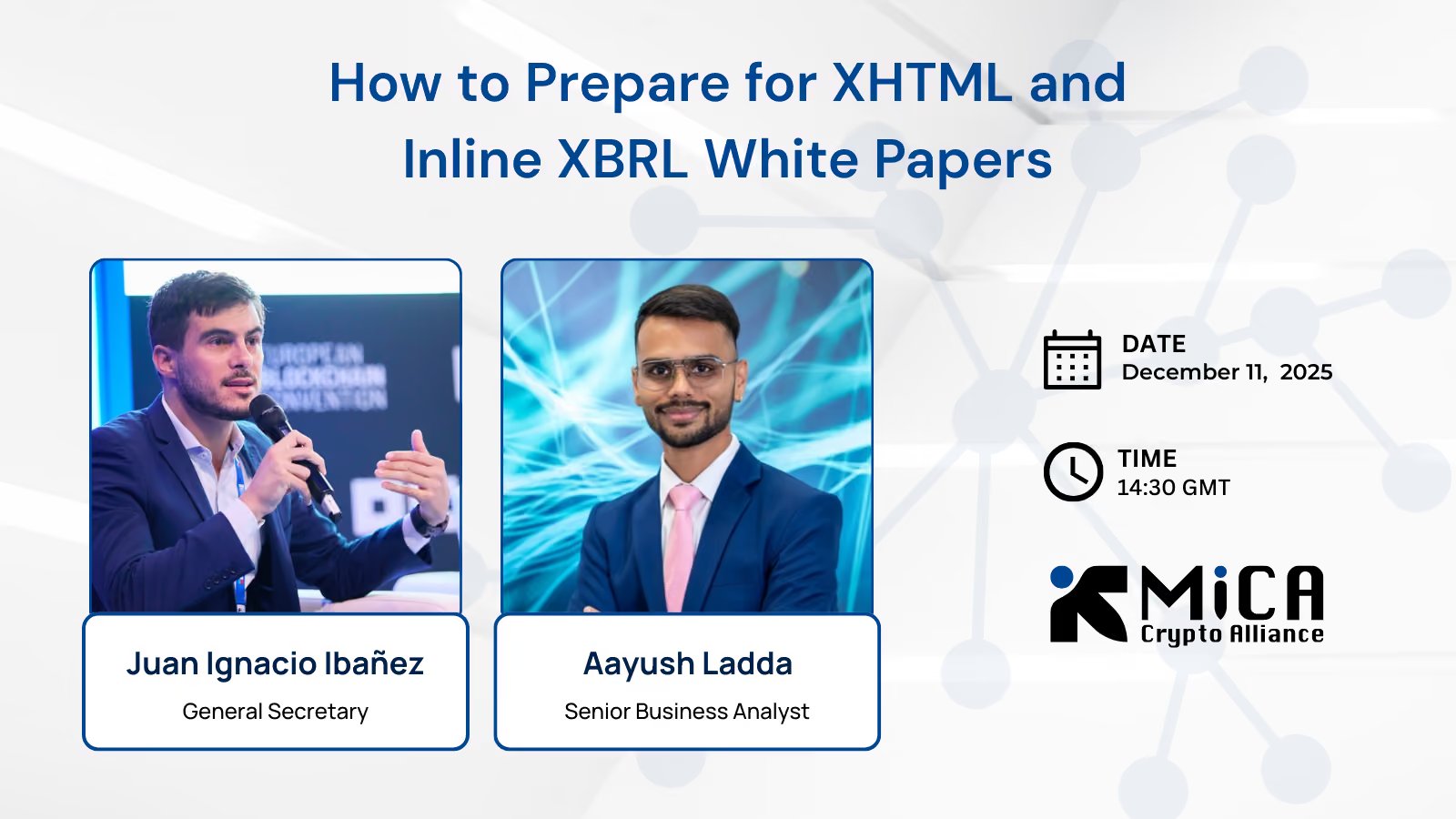
As the EU’s Markets in Crypto-Assets (MiCA) Regulation moves from early implementation into a more mature enforcement phase, one thing is becoming clear: the way crypto-asset white papers are prepared is about to change fundamentally.
Until now, many projects have been able to submit MiCA white papers as PDFs or simple documents, often relying on transitional regulatory tolerance. That phase is ending.
From December 23 2025, MiCA white papers must be submitted in a machine-readable format using inline XBRL (iXBRL). For many issuers, offerors, and trading platforms, this is not just a formatting change. It is a structural shift in how compliance will be assessed and a material increase in the degree of scrutiny.
In a recent webinar, the MiCA Crypto Alliance explored what this shift really means in practice, and why many existing approaches to “XBRL compliance” fall short.
XBRL Under MiCA: What Is Changing in Practice
MiCA has always required white papers to be made available in a machine-readable format, but had subjected this requirement to an implementing regulation. What has changed is how that this regulation is now coming into force.
Commission Implementing Regulation (EU) 2024/2984 specifies that MiCA white papers must be prepared using inline XBRL, embedding machine-readable data directly into a human-readable document.
In practice, this means:
- The white paper must still read like a normal, human-readable, document
- Every required disclosure must also be precisely tagged for automated analysis
In addition, the Implementing Regulation subjected itself to an XBRL taxonomy to be published by ESMA. This finally happened in August 2025, providing an additional four months to adapt to these requirements.
This marks the end of the PDF-only era.
Why XBRL Validation Alone Is Not Sufficient
One of the most important messages from the webinar was simple but often overlooked:
A white paper can comply with XBRL taxonomy, and still may or may not pass the validation rule checks and even if validated it can still violate MiCA RTS.
This reflects a real and unresolved issue in the current implementation framework.
ESMA has published:
- An official MiCA XBRL taxonomy
- A set of validation rules
- Supporting tools to help issuers get started
However, these elements are not perfectly aligned with the underlying Regulatory Technical Standards (RTS) and implementing regulations.
In practice, this creates situations where:
- The taxonomy expects a boolean value
- The RTS requires a fixed textual statement
- Validation passes, but the white paper does not meet legal requirements
Validation confirms that a document conforms to the taxonomy. It does not confirm that it complies with MiCA as a Regulation with the applicable RTS. More sophisticated approaches are needed to comply with both at the same time, which are discussed in the webinar.
Limitations of ESMA’s XBRL Tools
ESMA has been explicit that any tools it provides are offered without assuming any liability. Errors introduced through these tools remain the responsibility of the white paper preparer.
During the consultation phase, the MiCA Crypto Alliance provided detailed feedback on:
- Missing conditional checks
- Incorrect data-type expectations
- Sustainability thresholds that are not enforced by validation rules
While many issues were addressed, some remain unresolved. As a result, it is entirely possible to generate an XBRL white paper that passes automated checks, appears formally valid, and is nevertheless non-compliant.
Sustainability Disclosures as a Compliance Risk
One of the most overlooked compliance risks under MiCA is sustainability and ESG disclosure.
Certain sustainability indicators become mandatory once specific thresholds are crossed, but the taxonomy and validation rules do not always enforce these conditions, nor do they reflect properly the nature of these indicators. As a result, a white paper could be unable to pass technical checks and provide the indicators correctly at the same time, if the preparer does not know how to navigate these challenges.
MiCA’s sustainability framework goes beyond minimum disclosure, distinguishing between mandatory, supplementary, and optional indicators. The MiCA Crypto Alliance reflects this intent by implementing sustainability disclosures beyond the bare minimum, always integrating supplementary and optional indicators alongside mandatory ones, demonstrating a commitment to best practices beyond the bare minimum, which supervisory authorities greatly appreciated.
What Best-Practice MiCA XBRL White Papers Look Like
Not all XBRL white papers are created equal.
At a minimum, a compliant white paper must:
- Follow the correct taxonomy
- Pass validation
- Respect file format and submission constraints
Best-practice white papers go further:
- Deep, precise tagging rather than shallow tagging
- Clear alignment between human-readable text and machine-readable data
- Inspectable disclosures that regulators can easily review
- Integrated sustainability data, rather than disclosures added after the fact
As regulators increasingly rely on automated analysis, poorly structured or minimally tagged documents are more likely to trigger manual review, delays, or follow-up requests.
Why MiCA Requires Specialised XBRL Expertise
XBRL itself is not new. It has been used for years in financial reporting, including SEC filings. However, MiCA white papers are not financial statements, and repurposing financial statement tools to MiCA without white paper expertise creates problems.
Effective MiCA XBRL implementation requires:
- Legal interpretation of MiCA and RTS requirements
- Technical understanding of XBRL taxonomies and validation
- Domain knowledge of crypto-asset design and sustainability metrics
This is why generic XBRL conversion tools and non-MiCA-specialist providers often fall short.
Preparing for the Next Phase of MiCA Enforcement
Rather than constituting mere bureaucracy for bureaucracy's sake, the shift to inline XBRL is about making white paper content useful to regulators. Machine readable white papers mean much higher scrutiny as supervisory authorities can compare fields systematically across documents, agregate information, extract data efficiently and scale supervision as the market grows. This also means that, as supervisory authorities become more dexterous at processing XBRL submissions, additional requirements may be put in place at the submission stage, more akin to the advanced use of XBRL in SEC filings. As a result, projects that treat XBRL as a box-ticking exercise may get through initial submission, but they are unlikely to be future-proof.
The safer approach is to treat MiCA white papers as living compliance instruments, designed from the outset to withstand deeper scrutiny.
Working with the MiCA Crypto Alliance
MiCA’s XBRL requirements are often framed as a technical burden. In reality, they signal that crypto-asset disclosures are entering a more serious regulatory era.
Doing this well requires more than software. It requires interpretation, judgement, and experience with how regulators actually read, validate, and use these documents in practice. As MiCA enforcement matures, the difference between what is technically valid and what is truly compliant will matter more than ever.
This is where specialist support becomes critical. Preparing a MiCA white paper today means aligning legal requirements, XBRL implementation, and sustainability disclosures into a single, coherent regulatory submission.
The MiCA Crypto Alliance works with token issuers, offerors, trading platforms, and infrastructure providers to produce MiCA-compliant white papers and inline XBRL submissions that go beyond minimal validation. This includes integrating mandatory and supplementary sustainability indicators, resolving misalignments between the RTS and the taxonomy, and ensuring that human-readable and machine-readable disclosures tell the same regulatory story.
Whether you are preparing a new white paper, updating an existing one, or planning for the upcoming XBRL submission requirements, early and informed preparation can significantly reduce regulatory friction later on.
To discuss support for MiCA white papers, inline XBRL submissions, or sustainability and ESG disclosures, you can complete the Join the Alliance form and indicate the specific services you are looking for.
The full webinar is available to watch below.


