

Davos 2026: Stablecoins, Tokenisation and Financial Infrastructure
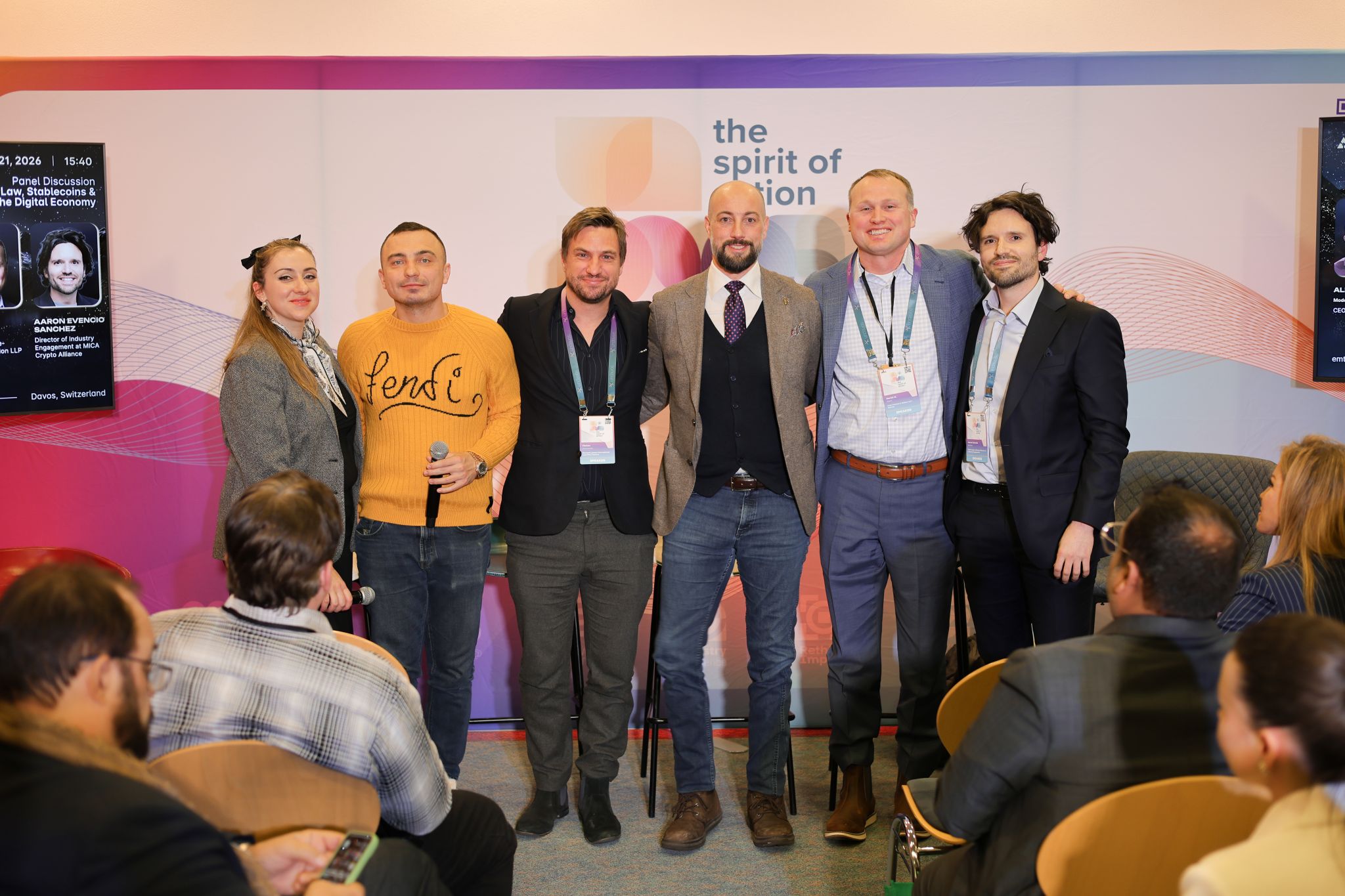
Davos 2026 marked a clear shift in how digital assets are being discussed at the institutional level. Across policy, legal, and market infrastructure conversations, stablecoins and tokenised real‑world assets (RWAs) were no longer treated as experimental innovations, but as emerging components of core financial infrastructure.
For the MiCA Crypto Alliance, the week reinforced a consistent theme: the challenge is no longer whether these instruments will be adopted, but how regulatory frameworks evolve to reflect what they already are in practice.
Breaking out of legacy categories
A recurring theme throughout the week was the difficulty of applying traditional regulatory labels to new digital instruments. Stablecoins and tokenised RWAs were frequently described as breaking existing distinctions between deposits, securities, and e-money.
As discussed across multiple sessions, the same instrument can function simultaneously as a payment mechanism, a collateral asset, and part of market infrastructure. Attempts to force these instruments into legacy categories were repeatedly identified as a source of regulatory and operational tension.
Beyond MiCA: stablecoins as infrastructure
These questions were central to the roundtable “Beyond MiCA: Stablecoins, Infrastructure and the GENIUS Era”.
The discussion focused on how stablecoins are being used in practice, and whether existing regulatory categories adequately capture their role. Rather than concentrating on formal classifications, participants examined what it means to approach stablecoins as infrastructure supporting payments, settlement, and market activity, and how regulatory frameworks might respond to that reality.
Tokenisation as the backbone of next‑generation finance
A similar infrastructure‑level perspective shaped the unDavos roundtable “Tokenisation as the Backbone of Next‑Generation Financial Infrastructure”.
In this session, tokenised RWAs were discussed as core architecture for next‑generation financial markets. Examples referenced during the discussion included bonds, funds, and money‑market instruments moving from pilot projects towards production use, particularly in wholesale and institutional contexts.
Trust, enforcement, and legal clarity
The panel “The New Rules of Trust: Law, Stablecoins and Enforcement in the Digital Economy” addressed how questions of trust and enforceability intersect with the growing use of stablecoins and tokenised assets.
The discussion focused on the role of legal clarity and enforcement in supporting confidence in digital financial systems. Panellists examined how stablecoins can be made transparent and enforceable in practice, while still supporting innovation in payments and market infrastructure.
Closing remarks
The MiCA Crypto Alliance would like to thank the hosts, organisers, and speakers who contributed to the discussions in Davos, including the Nordic Blockchain Association, BitGo, Bybit, unDavos Summit, EmTech Invest. The Alliance was pleased to participate as a partner of both unDavos Summit and EmTech Invest during the week.
The Alliance will continue participating in industry and policy forums to support the development of MiCA-aligned approaches that reflect how digital assets are being discussed and used in practice.